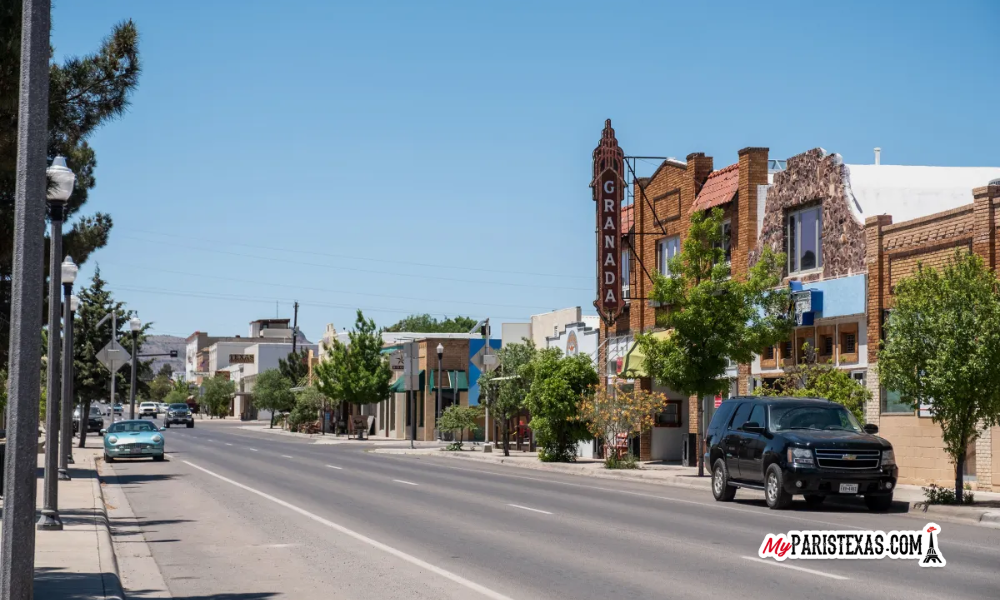

More than 130 cities, most with fewer than 10,000 residents, were blocked from increasing their property tax revenue because they had broken the law.
When Monte Walker took the reins as city manager of Howe, a town with a population of 3,686 some 50 miles north of Dallas, the city hadn’t audited its books for two years — even though state law says they must be done annually. The town had seen turnover in its management, and past officials hadn’t gotten those audits done before he took the job in 2023, Walker said.
Some three years later, Howe is nearly caught up, Walker said.
But last month, Howe got a letter from Texas Attorney General Ken Paxton: because the city’s behind on its audits, the attorney general had effectively frozen the city’s property tax rate for the foreseeable future. That’s owing to a new state law that forbids cities from raising property taxes if they’re not up-to-date on their financial audits — a law that appears to be falling disproportionately on smaller Texas towns as cities everywhere face tightening budgets.
Howe wasn’t the only one. Last month, Paxton told more than 130 Texas cities, most with fewer than 10,000 residents, to freeze their property taxes because they’re breaking that law.
That determination leaves Howe in a bind, Walker said — looking for funds in an already slim city budget to pay for multiple audits while the state tells the town it can’t seek more revenue.
“It’s kind of a Catch-22,” Walker said.
Howe is on a new front in Texas Republicans’ war to rein in the state’s high property taxes: cities and towns that haven’t kept their books up to date.
State law requires cities to audit their finances each year, requiring an independent reviewer to go over cities’ financial records to make sure its monies are accounted for. Cities must also meet a deadline to release a financial statement based on that audit to the public. Before last year, there was no direct penalty for cities that didn’t follow the law. Then, Texas legislators quietly passed a new law barring cities from raising more in property taxes than they did the previous year if they don’t perform an audit.
“You’ve got a reasonable amount of time to get your audit in,” said state Sen. Robert Nichols, an East Texas Republican who carried the bill. “You shouldn’t be raising taxes on people unless you understand your numbers and you feel very comfortable with your numbers.”
Source: Joshua Fechter,
Photo Credit: Alpine, pictured here in 2020, is one of over 130 Texas towns and cities to receive letters from the state attorney general’s office notifying them that they are prohibited from raising ad valorem taxes above the no-new-revenue tax rate. Sarah M. Vasquez for The Texas Tribune
The Texas Tribune is a nonprofit, nonpartisan media organization that informs Texans — and engages with them — about public policy, politics, government and statewide issues.