
The state health agency is also processing 64% of food benefits applications in a timely manner — within 30 days — even though the required rate is 95%.
The number of Texans receiving food stamps has hit a 17-year low as the federal government tightens eligibility and the state struggles to process applications in a timely manner.
There were 2.8 million Texans enrolled in the Supplemental Nutrition Assistance Program (SNAP) in September, which is the lowest enrollment number since August 2009, according to most recent data available from the Texas Health and Human Services Commission. Nationally, SNAP enrollment is also at a 17-year low.
Experts believe the drop stems from the One Big Beautiful Bill Act passed by Congress last year that requires more people to work to remain eligible and penalizes states for high error rates of overpaying or underpaying recipients. Compared to September 2025, Texas’ SNAP enrollment dropped 20.8% — the steepest year-over-year decline of the last two decades.
Meanwhile, HHSC, which oversees SNAP and Medicaid applications, stares down a growing backlog of unreviewed applications. In September, the state processed 64% of SNAP applications in a timely manner — within 30 days — which is significantly lower than last September when the timeliness rate was 91%. The federal government requires states to process 95% of applications in a timely manner or the state risks losing federal funding.
“The declines aren’t the result of people leaving the program because they no longer need it, or because they found work,” said Celia Cole, the CEO of Feeding Texas, a statewide network of food banks. “At the same time that you’re seeing this record low enrollment, we’re seeing record high need in our communities. More people need help, and really people need deeper help.”
HHSC told The Texas Tribune it will continue to help eligible Texans receive food and healthcare benefits, and enforce work requirements. The agency did not provide an explanation for what’s driving down enrollment.
“New SNAP mandates require a thorough review of each case to ensure program integrity and accuracy,” said Guillermo Zenizo Lindsey, an assistant press officer for the agency. “HHSC will continue supporting eligible Texas families as quickly as possible.”
Compared to September 2025, enrollment has dropped in every age group.
Children, who make up the majority of SNAP recipients at 1.4 million, have been hit the hardest. Children make up more than half of the enrollment losses since September 2025.
The number of children under the age of 5 enrolled in SNAP has never been this low in more than 20 years, according to the data.
Individuals and families qualify for SNAP if they make below a certain threshold for income. For example, a family of four qualifies if they make $4,421 a month or less. Enrollees typically stay on the program for about a year, on average. Enrollment typically increases in times of hardship. More people enrolled as a result of the COVID-19 pandemic, and states will see more applications around natural disasters or economic downturns.
“(SNAP is) that temporary bridge to stability for people and for our economy and for our producers,” Cole said.
What’s causing the drop
Under the One Big Beautiful Bill Act (OBBBA), some people are no longer eligible for SNAP, including refugees. Undocumented immigrants cannot receive SNAP benefits, but under the OBBBA many lawful migrants have also lost eligibility.
The bill also put new work requirements on people who hadn’t had those requirements before.
In 1996, federal lawmakers determined that able-bodied childless adults under 54 were required to work a certain number of hours a month to receive SNAP benefits. If they failed to meet that requirement for three months or more in a three-year period, they lost eligibility. OBBBA expanded that work requirement to parents of children under 13 as well as people up to 64 years old.
Cole said some folks between the ages of 55 and 64 were struggling with the new work requirements, especially those who hadn’t had to work prior to this and were out of the labor force for years.
The bill also set the stage for cost-sharing between the federal government and states. Currently, the federal government covers the cost of SNAP benefits. If Texas doesn’t lower its current error rate of nearly 9% to below 6%, Texas could face up to $2 billion in additional costs over the 2028-2029 state budget cycle.
Texas HHSC Executive Commissioner Stephanie Muth said in her 2028-2029 budget request to the Legislature that bringing down the SNAP error rate was her top priority.
“Every improvement in accuracy helps protect taxpayer dollars and reduce the state’s exposure to these new costs,” she said. “HHSC has launched a comprehensive effort focused on improving eligibility accuracy, strengthening quality controls, and leveraging technology to reduce errors and mitigate the financial impact of these program changes on Texas taxpayers.”
Source: Texas Tribune BY Jess Huff
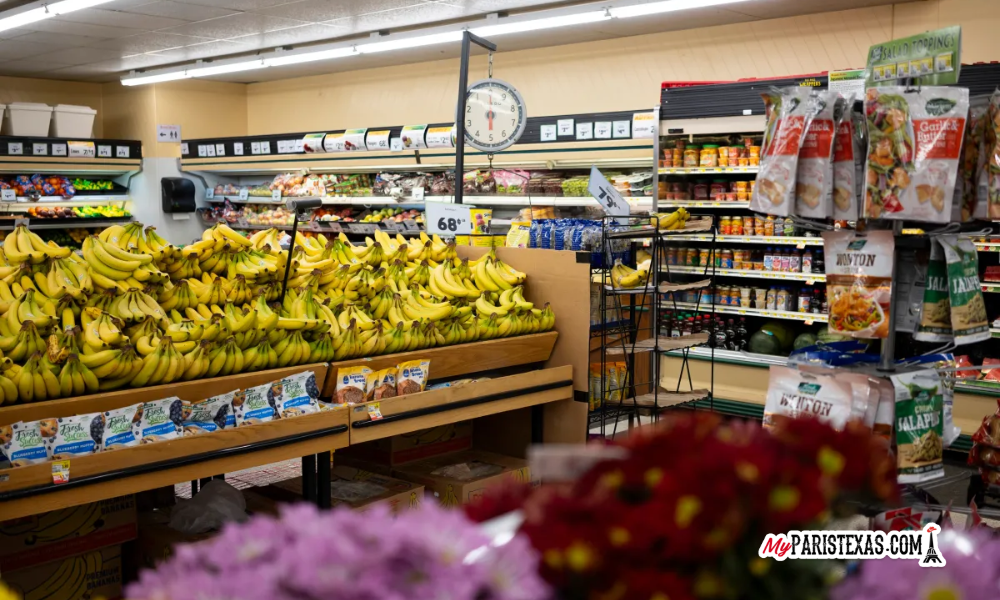
Photo: The fresh produce section at a grocery store in Buffalo, Texas, on June 29, 2023. Joe Timmerman/The Texas Tribune