
The exchange represents the most well-funded challenge to the New York Stock Exchange and NASDAQ duopoly of U.S. stock trading.
The Texas Stock Exchange commenced trading on Monday, kickstarting the first real test of one of the most well-funded new exchanges to launch in decades.
The Texas Stock Exchange, a Dallas-based startup, is initiating a phased rollout to take place over the course of July. On Monday, the exchange opened to TXSE members, including approved broker-dealers, banks and trading firms, to trade test stocks initially, then the symbols for thousands of stocks and other equities will come online over the course of the month, allowing the public to start trading.
By the third quarter, exchange officials hope to have Exchange-Traded Products, or ETPs, listed on the exchange and corporate listings available during the fourth quarter of this year, according to a statement from the exchange.
Both Texas state government and stock exchange officials hope the Texas Stock Exchange, or TXSE, launch will solidify Dallas’ attempt to become a national financial hub and boost the Texas economy by growing the financial services industry in the state and making money for any Texas companies and investors that are doing business through the exchange.
“With the start of full production trading, any last notions that TXSE is theoretical are instantly swept away,” a TXSE official wrote in a statement Thursday.
Monday’s start of trading is critically important to test-run and demonstrate to companies interested in listing on TXSE that it can provide a viable alternative to the New York Stock Exchange and NASDAQ, said Sriram Villupuram, a University of Texas at Arlington associate professor of finance.
“Basic technical things, hopefully will work well,” Villupuram said. “This is the first demonstration. It’s like a new car, a brand new company pushing out their first car. I think they’ll get through it fine, but things can go wrong. This is a high tech exchange at the end of the day.”
While most trading is now done electronically, the location of a stock exchange still matters, said Ray Perryman, president of the Waco-based economic research company The Perryman Group. Investors tend to hold stocks in and trade more on nearby companies, and Texas has both ingredients for a successful exchange — a rapidly growing pool of investors via the growth of the financial sector in the Dallas area, as well as Fortune 500 companies headquartered in the state that they can invest in, he said.
“A homegrown national exchange means more jobs, more investment, and more growth opportunities for businesses and communities across the Lone Star State,” said Gabriela von zur Muehlen, senior vice president and chief policy officer at the Texas Association of Business.
Source: Paul Cobler, The Texas Tribune
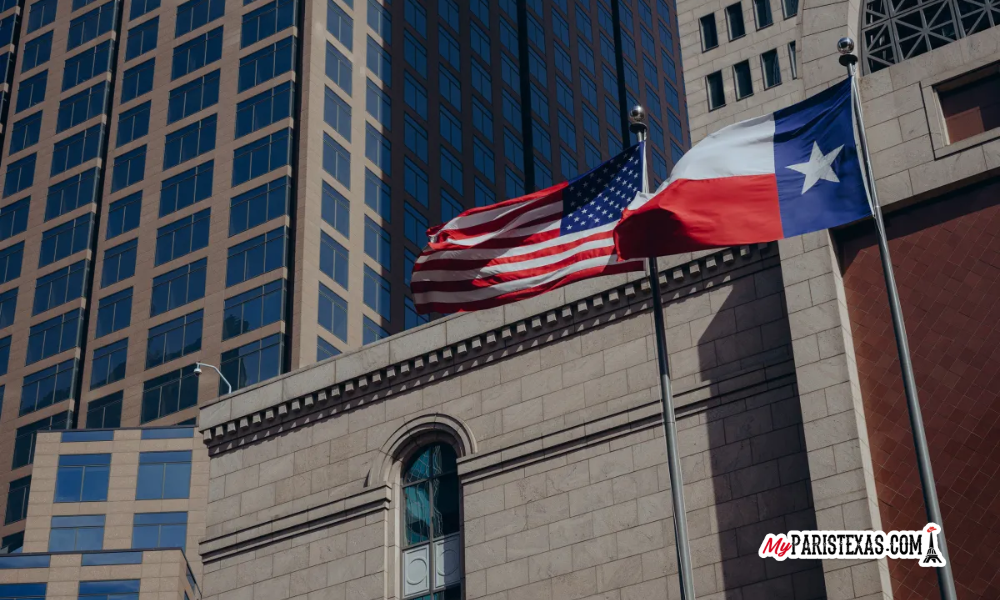
Photo Credit: The American and Texas flags over Comerica Bank in downtown Dallas on Feb. 17, 2026. Manoo Sirivelu/The Texas Tribune
The Texas Tribune is a nonprofit, nonpartisan media organization that informs Texans — and engages with them — about public policy, politics, government and statewide issues.