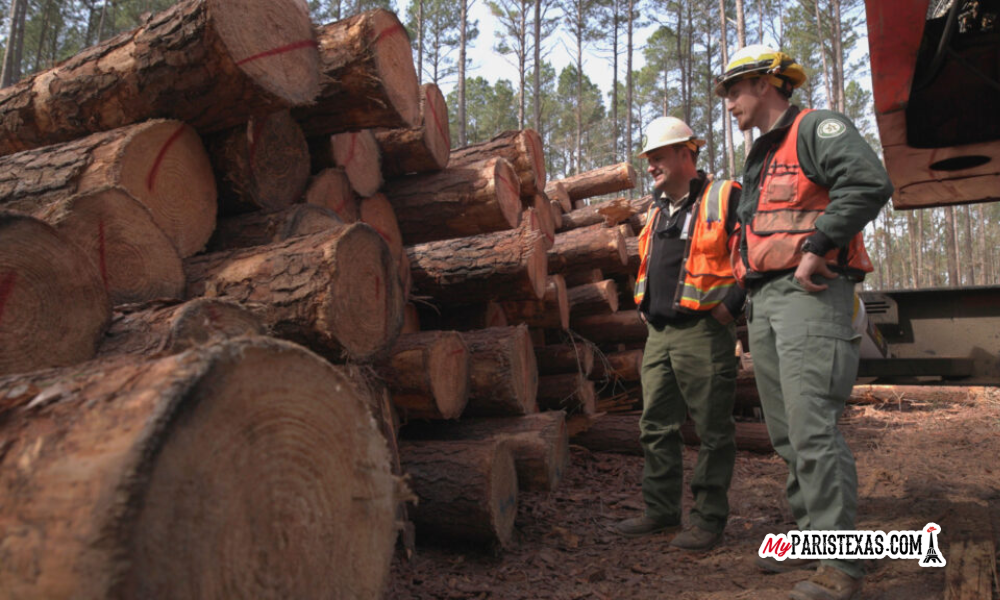

The Good Neighbor Authority allows state forestry agencies to conduct forest management work on national forest lands. In Texas, this partnership helps both agencies meet forest management needs while creating meaningful benefits for forests, wildlife and communities.
Through the Good Neighbor Authority, Texas A&M Forest Service is working alongside the USDA Forest Service to improve forest health, reduce wildfire risk and support local communities across East Texas.
The Good Neighbor Authority allows state forestry agencies to conduct forest management work on national forest lands. In Texas, this partnership helps both agencies meet forest management needs while creating meaningful benefits for forests, wildlife and communities.
Currently, Texas A&M Forest Service is managing a 647-acre timber sale in the Davy Crockett National Forest in Trinity County. The project includes 17 stands that have not been thinned since replanting efforts after southern pine beetle infestations in the 1980s.
“Federal timber sales can take several years to move from planning to implementation,” said Zachary Ovelgonne, Texas A&M Forest Service district forester. “Through the Good Neighbor Authority, we were able to prepare and begin operations within about a year and a half.”
Texas A&M Forest Service managed the project similarly to work conducted on state-managed forestlands, including timber sale preparation, timber marketing, contract administration and oversight of harvest operations. The agency also uses timber sale tools and approaches to attract additional buyers and move the project forward efficiently.
For the USDA Forest Service, the partnership provides additional capacity to accomplish important forest management work across national forest lands.
“The Good Neighbor Authority partnership with Texas A&M Forest Service demonstrates what can be accomplished when we work together toward a common goal,” said Kimpton Cooper, forest supervisor for the USDA Forest Service. “By combining our expertise and resources, we can complete critical forest management work that improves forest health, reduces wildfire risk, supports local economies and ensures these national forests remain healthy and resilient for generations to come.”
Over time, the stands became densely packed and increasingly vulnerable to wildfire and insect outbreaks. Through thinning operations, crews are reducing tree density, improving forest health and creating conditions that better support long-term forest resilience.
“We’re reducing overcrowding in these stands to lower southern pine beetle risk and improve overall forest health,” said Ovelgonne.
The work also supports wildlife habitat, including habitat for the red-cockaded woodpecker. Thinning helps create the open forest conditions preferred by the species while supporting a diversity of wildlife across the landscape.
The partnership also supports local communities. Timber harvesting creates opportunities for local logging crews, truck drivers, equipment operators and forest products mills throughout East Texas.
“It’s local people doing the work, and it provides steady employment over several months,” Ovelgonne said.
Good Neighbor Authority projects allow revenue from local timber harvests to remain connected to the national forest and surrounding communities where the work takes place. In Texas, Texas A&M Forest Service has partnered with counties to reimburse improvements to roads that support access to national forest lands.
The project has also created collaboration opportunities for Texas A&M Forest Service personnel. Foresters and resource specialists from multiple regions have participated in timber cruising, project preparation and forest management activities throughout the effort.
The Good Neighbor Authority is an example of a shared stewardship approach, where federal, state and local partners work together to address landscape-scale challenges.
Forest health challenges do not stop at property boundaries. By working across ownership lines, Texas A&M Forest Service and the USDA Forest Service can improve conditions not only on national forest lands, but across the broader East Texas landscape. Improving forest health on national forests also helps protect neighboring private forestlands and communities from threats such as wildfire, insects and diseases.
By improving forest conditions today, the Good Neighbor Authority partnership is helping create healthier, more resilient forests for the future while supporting the communities connected to them.
Article source and photo credit: Savanna Montgomery, Communications Specialist – Texas A&M Forest Service Communications