
Latino children accounted for the vast majority of students who left public schools this year, according to a new analysis.
Roughly 76,000 fewer students enrolled in Texas public schools this academic year, the first non-pandemic decline in nearly four decades, with Hispanic students accounting for the overwhelming majority of the loss, according to a report released Monday.
The policy research group Texas 2036 analyzed the state’s enrollment data and projected that about 100,000 fewer students would attend public schools by the end of the current decade. However, some projections show the number growing by nearly half a million over that time.
Hispanic students accounted for 81% of this school year’s enrollment drop, Texas 2036 found. Students learning English and those from low-income families experienced some of the sharpest declines. Over the past year, federal and state leaders increased anti-immigration rhetoric, in some cases detaining Texas students and prompting fear across communities.
Meanwhile, the rate of Texas families having children has declined in recent years. Districts have lost students to other schooling options, with more families expected to opt out of their public neighborhood campuses as the state launches school vouchers later this year.
Texas educates about 5.5 million public school students, 53% of whom are Hispanic, 24% are white and 13% are black.
“What stands out in the data is that public school enrollment is falling even as Texas continues to grow,” said Carlo Castillo, a senior research analyst at Texas 2036, in a statement. “In many parts of the state, population gains are no longer translating into public school enrollment growth. That points to a broader structural shift policymakers and district leaders will need to plan for.”
The nonprofit shared the findings just ahead of Monday’s education committee hearing for the Texas House. The focus included updates on enrollment trends and the stability of Texas’ school funding system.
The state funds public schools based on attendance. Some districts have cut programs and shuttered campuses recently, despite a nearly $8.5 billion increase to public education funding approved last year.
As the hearing began, Texas Education Commissioner Mike Morath laid out the enrollment drop to lawmakers, noting, “We cannot tell you the precise cause of this.”
In recent years, growing immigration helped public schools manage the slump in birth rates, Bob Templeton, who studies Texas’ education demographics, said during the Monday hearing.
Now, districts will serve higher concentrations of students with significant needs, but they will have less funding due to drops in the number of children born and slowing immigration, Templeton said. He estimated that public school enrollment could drop by roughly 500,000 in the next four to five years.
“This is not another blip or a one-off,” Templeton told lawmakers. “This is an inflection point.”
Districts in urban areas, the Panhandle and along the southern border disproportionately experienced the enrollment decline, according to the Texas 2036 report. The 2.1% decline in Hispanic enrollment — or 61,781 students — represents “the single largest year-over-year reversal” among the four major racial and ethnic groups.
Mary Lynn Pruneda, the director of education and workforce policy for Texas 2036, told The Texas Tribune that her group could not determine to what extent increased immigration enforcement contributed to the enrollment loss.
Rep. Gina Hinojosa, an Austin Democrat running for governor, said during a press conference Monday, “I wouldn’t be surprised if it is contributing to it.”
Esmeralda Alday said she hears directly from families who question whether they should send their children to school at a time when immigration officers have increased activity. She is the senior director of programs and impact at ImmSchools, a national nonprofit that supports immigrant students in Texas and other states.
Some parents considered pulling their kids from bilingual education programs or sending their children to virtual schools out of fear that officers will target them, Alday said.
“I’ve heard it directly from the teachers, from principals, saying, ‘Hey, these kids just disappeared. Can you help us locate them or help us figure out what happened to them or to their parents?’” Alday said. “So, yes. It’s fear.”
Source: Jaden Edison,
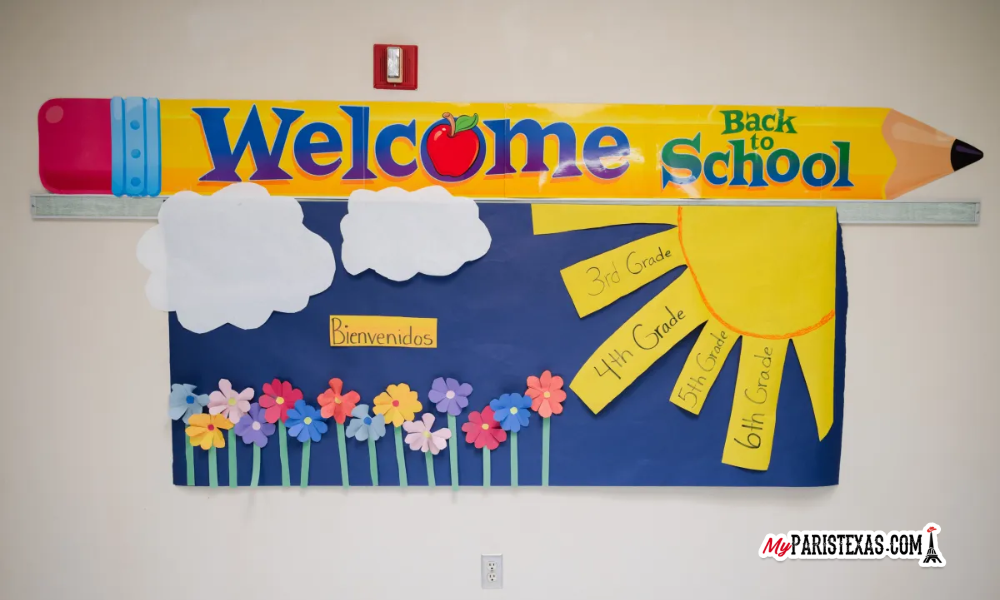
Photo Credit: Texas schools saw a decline of more than 76,000 students this academic school year, according to a report released ahead of Monday’s public education committee hearing in the Texas House. Justin Hamel for The Texas Tribune
The Texas Tribune is a nonprofit, nonpartisan media organization that informs Texans — and engages with them — about public policy, politics, government and statewide issues.