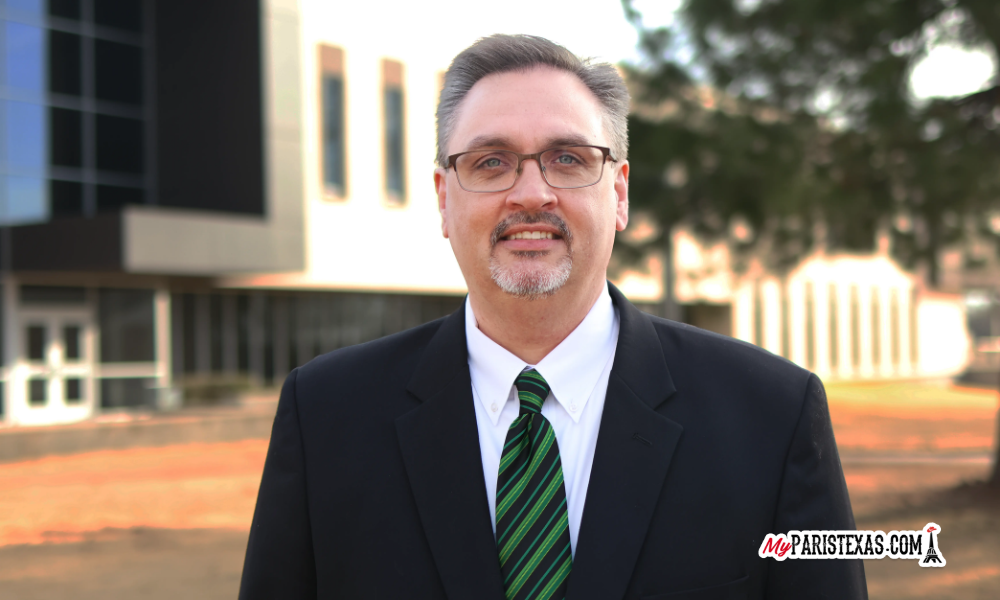

Guest Editorial by Dr. Stephen M. Benson, President, Paris Junior College
Ask someone to describe a “typical college student,” and chances are they’ll picture an 18-year-old fresh out of high school, living in a residence hall and spending the next four years earning a bachelor’s degree.
That image no longer reflects the reality of higher education.
Today’s college student could be a high school junior earning college credit before graduation, a single parent attending evening classes after work, a veteran beginning a second career, an adult returning to finish a degree started years ago, or a recent high school graduate preparing to transfer to a university. It could also be someone completing a short-term workforce credential that leads directly to a high-demand career.
Higher education has changed because the needs of students—and employers—have changed.
What has not changed is the rigor of a college education. Community colleges are not a shortcut to a college degree, nor are they an easier path. Students are held to high academic standards while benefiting from the personal attention and support that help them succeed.
That transformation is evident at Texas community colleges.
Today, Texas community colleges educate more than 740,000 students—more than all of the state’s public universities combined. They also educate the overwhelming majority of students enrolled in career and technical education and workforce programs across the state, responding quickly to employer needs while preparing students for careers that strengthen our communities and economy. That isn’t simply a statistic; it reflects where Texans are choosing to begin, continue, and advance their education. While the Texas State Technical College system plays an important role in preparing Texans for high-demand careers, it serves approximately 12,000 students statewide, illustrating the tremendous scale at which Texas community colleges educate and prepare the state’s workforce.
That transformation is not just happening across Texas—it’s happening every day at Paris Junior College.
PJC has been doing this work for more than a century. Over the past two years, the College has welcomed more than 1,000 additional students. Last fall, more than 5,200 students were enrolled—the highest enrollment PJC has seen in years. More than 2,500 of those students are still in high school, earning college credit through dual credit partnerships that save families thousands of dollars while accelerating their path toward a degree or career.
Our students represent every stage of life and every educational goal.
Some choose the traditional residential college experience—living on campus, competing in college athletics, participating in student organizations, and performing and creating through our outstanding fine arts programs. Others commute from across our six-county service area while balancing careers, raising families, or caring for loved ones. Some attend during the day, while others learn in the evenings or through online and hybrid courses.
Just as there is no single type of student, there is no single pathway to success.
Many PJC students plan to transfer to a university and earn a bachelor’s degree. Others complete workforce certificates and associate degrees that lead directly to rewarding careers. Some do both, earning technical credentials that allow them to begin working immediately while continuing their education.
Education is no longer something people complete in their early twenties. Throughout their careers, Texans return to college to earn new credentials, update technical skills, or prepare for entirely new professions. Community colleges have become the place where lifelong learning happens.
Although higher education has changed dramatically, one thing has not: the academic expectations of college. Community colleges are not a shortcut to a college degree, nor are they an easier path. Our students complete the same college-level coursework, earn the same transferable credits, and are held to the same high academic standards expected throughout higher education. Universities, community colleges, and technical colleges are accredited through rigorous quality standards that help ensure students receive a high-quality education regardless of where they begin their college journey. The difference between the institutions is not the rigor—it is the support provided to students.
At Paris Junior College, we believe academic excellence and student support go hand in hand. Our faculty challenge students to meet high expectations while providing the encouragement, mentoring, and resources they need to succeed. We know our students by name. We celebrate their successes, help them overcome obstacles, and care deeply about their futures. We believe students achieve more when they know someone believes in them.
One of the greatest misconceptions about community colleges is that they are somehow a “second choice.” In reality, they are often the smartest first choice.
Research consistently shows that students who begin at a community college and transfer to a university perform as well as—or often better than—their peers who begin at four-year
universities. They ultimately earn the exact same bachelor’s degree, often graduate with significantly less student debt, and benefit from smaller class sizes and faculty whose primary focus is teaching and student success during those critical first two years.
Community colleges have also become leaders in workforce education. Whether someone is pursuing an associate degree, an industry-recognized certification, or specialized technical training, community colleges have become Texas’ primary workforce development partner—educating nurses, welders, electricians, industrial maintenance technicians, law enforcement officers, teachers, business professionals, and countless other professionals who keep our communities and economy strong.
Paris Junior College and the community colleges in Texas are built to provide all these options. It is our mission and goal every day.
At Paris Junior College, we are proud to serve every kind of student. Whether someone dreams of transferring to a university, entering the workforce, advancing in their current career, serving their community, or discovering a new passion, they belong here. Our mission is not to prepare students for one path—it is to help them find the path that is right for them.
The question is no longer what a college student is supposed to look like. The better question is whether our colleges are prepared to meet students where they are and help them achieve where they want to go.
Every day, community colleges answer that question with a resounding yes. Higher education is no longer defined by age, background, or circumstance. It is defined by opportunity.
Today’s college student doesn’t fit yesterday’s definition. Today’s community colleges haven’t lowered the bar; they’ve developed more opportunities to help students reach their goals.