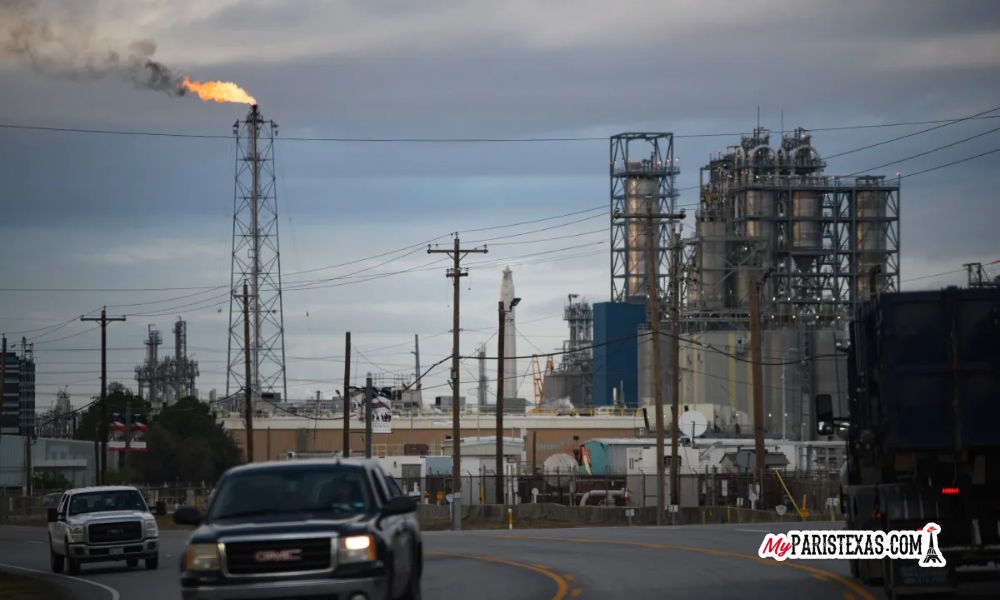

As President Donald Trump seeks to boost U.S. investment in Venezuela’s oil fields, Mexico is poised to export less heavy crude to Gulf refineries, creating an opening for Venezuelan oil.
Texas oil refiners could soon have a stronger appetite for Venezuelan oil thanks to decreasing crude imports from Mexico as the Trump administration seeks to open Venezuela’s energy sector to U.S. companies.
Refiners along the U.S. Gulf Coast are among the world’s largest buyers of heavy crude oil — a variety with a peanut butter-like consistency that is more costly to extract and refine than Texas’ light sweet grade. For years, Texas refiners’ most prolific sources of heavy crude have been Canada, Mexico and Venezuela.
But after the Trump administration sent U.S. forces to capture Venezuelan President Nicolás Maduro and his wife, Cilia Flores, then promised to take control of Venezuela’s oil sales, Gulf Coast refiners are eyeing the possibility of increased Venezuelan oil imports. Within hours of Maduro’s capture, Trump placed a heavy emphasis on the country’s oil, saying that U.S. oil companies will be “taking a tremendous amount of wealth out of the ground.”
It remains unclear how much U.S. oil companies are willing to invest in increasing Venezuelan oil production. Many have said that they are seeking financial, legal and security assurances from the Trump administration before spending the billions of dollars necessary to significantly boost production levels.
Companies like ExxonMobil and ConocoPhillips are taking a cautious stance after their projects were seized by the Venezuelan government in 2007. Both companies continue to pursue compensation through international arbitration cases.
The Trump administration’s attempt to revive Venezuela’s oil industry coincides with Mexico’s national strategy to build its own refineries. U.S. Gulf Coast imports of Mexican heavy oil, known as Maya crude, are projected to drop this year as Mexico seeks to feed its oil into its own burgeoning refining sector.
This could create an opportunity for more Venezuelan oil to flow into U.S. refineries, analysts say.
“You could argue that some of the Venezuelan barrels are needed to replace what Mexico might end up keeping,” said Debnil Chowdhury, a Houston-based refining analyst at S&P Global Energy.
Valero Energy Corp., based in San Antonio, said it has already ramped up its Venezuelan oil purchases after the capture of Maduro. Speaking during a Jan. 29 earnings call, Valero Vice President Randy Hawkins told investors that Venezuelan crude will make up “a large part of our heavy diet as we move into February and March.”
It’s unclear how much more Venezuelan oil will begin flowing to the Gulf Coast as the Trump administration begins winding down sanctions that have been in place since 2019. Chevron, the only U.S. company currently authorized to operate in the country, has been producing 250,000 barrels per day, and the company is reportedly capable of increasing that figure by 50% within the next two years without major expenditures.
And Texas refiners are ready for it.
“Obviously having Venezuela supply back in the fold for our system is great news,” Hawkins said.
Latin American decline, Canadian rise
As the supply of heavy crude from Mexico and Venezuela grew in the 1980s, U.S. refining companies entered into long-term agreements with the state-owned oil companies, Mexico’s Pemex and Venezuela’s PDVSA.
The arrangements allowed companies to justify building large refining complexes specifically configured to transform Latin American heavy crude into a range of products, from diesel fuels to asphalt. Global oil companies spent billions of dollars on new facilities that turned the U.S. Gulf Coast into one of the world’s largest refining hubs.
“The refineries along the Gulf Coast, they were built thinking of Venezuelan oil,” said Lorena Moscardelli, director of the University of Texas Bureau of Economic Geology.
Over time, however, Latin American heavy crude production began to decline. Mexico’s offshore Cantarell field reached peak production at 2.14 million barrels per day in 2004 and has since declined to 115,000 barrels per day, according to Pemex data. Although a portion of those losses has been offset by the discovery and development of other, smaller oil fields.
Venezuelan production volumes recorded gradual declines in the years following Hugo Chávez’s 1999 ascent to the presidency. After recording peak production of nearly 3.5 million barrels per day in 1997, strikes, mass layoffs and mismanagement of PDVSA brought volumes to under 2.7 million barrels per day by Chávez’s 2013 death, according to data from the US Energy Information Administration. Production volumes continued to plummet under Maduro and today stand at under 1 million barrels per day.
Meanwhile, heavy crude production in the Canadian oil sands was beginning to ramp up. The link between Canada and Texas was solidified in 2014 with the completion of the Keystone pipeline’s Gulf Coast extension, which allowed refiners to fill a portion of the declining Latin American supply with Canadian crude.
But the Keystone pipeline can only carry so much oil to the Gulf Coast — its capacity tops out at 640,000 barrels per day. The proposed Keystone XL expansion would have more than doubled that capacity before the project was canceled in the face of stiff political opposition.
“That really took out a lot of the heavy crude” that Gulf Coast refiners could have processed, said Ramanan Krishnamoorti, a professor of petroleum engineering at the University of Houston.
Source: Brandon Mulder,
Photo Credit: A flare burns next to a refinery along the Houston Ship Channel in Deer Park on Feb. 6, 2023. Mark Felix for The Texas Tribune
The Texas Tribune is a nonprofit, nonpartisan media organization that informs Texans — and engages with them — about public policy, politics, government and statewide issues.