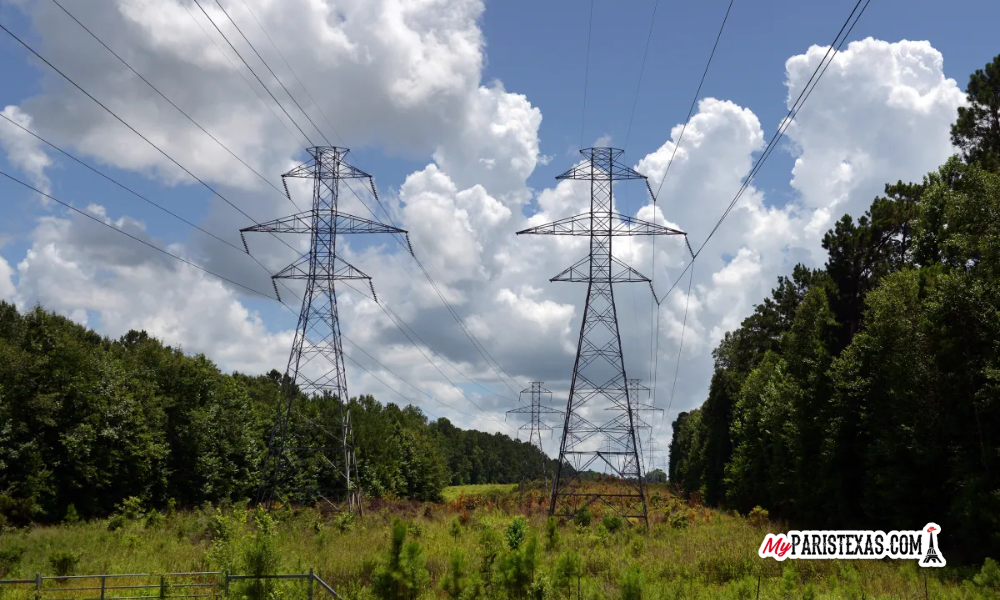

The Public Utility Commission voted to greenlight some proposals to build first-of-their-kind transmission lines after approving two massive lines last month.
ODESSA — The Public Utility Commission of Texas on Friday gave its approval to a controversial, 370-mile-long transmission line project, pending two transmission companies work with landowners to make modifications.
The Howard Solstice transmission line, as it is known, will transport electricity through South Texas to the oil and gas industry in the Permian Basin. The changes the commission seeks should reduce construction through grassland, the commission said.
The line will stretch across 14 counties, including Uvalde, Kerr, Bexar and Medina counties. The five-panel commissioners directed the two transmission companies to work with landowners to make further route modifications after residents expressed concerns that the lines would significantly damage their properties.
Friday’s vote is the second in as many weeks the commission has taken as part of its effort to supercharge West Texas oil production, work required under state law. Last week, the five commissioners presiding over the Utility Commission approved two first-of-their-kind transmission lines in North Texas after hours of impassioned testimony from landowners and the oil and gas industry.
“We’ve talked a lot about process, and to me, this is really an example, quite frankly, of the process working,” Commissioner Kathleen Jackson said before the panel voted.
Two other proposals on Friday were sent back to the agency’s administrative courts to resolve issues commissioners raised.
“At this time, I believe it is premature to address whether the recommendations in the (proposal) should be acted on,” Public Utility Commission Chair Gleeson wrote Wednesday in a letter to the other four commissioners, adding that the State Office of Administrative Hearings, which recommends the proposals commissioners vote on, issued an incomplete proposal for a decision. Gleeson wrote that the court did not explain whether the proposals met federal reliability standards.
“The lack of a recommendation on this issue is puzzling,” he wrote.
The administrative court’s ruling is also missing how much consumers would save, should the commission approve the transmission lines.
Altogether, the five transmission line proposals, designed by power grid managers at the Electric Reliability Council of Texas, are the state’s largest and most ambitious electricity infrastructure project.
“Chairman Gleeson’s memo underscores exactly why American Stewards of Liberty has urged the Commission to slow this process down,” said Margaret Byfield, executive director of American Stewards of Liberty, a national organization that champions land rights that has contested all five proposals. “Fundamental questions remain unanswered about whether these lines are actually required to meet reliability standards and whether they provide the economic benefits being claimed. Those are not minor details. They speak directly to whether a project that would cost billions of dollars and permanently burden private property is necessary in the first place.”
The proposals have put the industrial sector at odds with landowners over whether the lines are needed, catching the attention of lawmakers — many of whom voted for the bill that called for a plan to serve the state’s energy needs — and who now say they didn’t expect the transmission line proposals to be the outcome of that mandate.
The lines have alarmed swaths of landowners across Texas who worry the construction could cause irreparable damage to their land. Hundreds have filed letters and challenges to the applications, hoping the Utility Commission will reject them.
Some said they did not get legally required advance notice of the proposals, an argument the transmission companies disputed. Landowners have also said the Utility Commission’s 180-day timeframe to process the applications is too short. Ultimately, commissioners sided with the transmission companies, saying the applicants followed the Utility Commission’s rules.
Source: Carlos Nogueras Ramos, The Texas Tribune
Photo Credit: Power lines that cut through a property near Lufkin on June 12, 2026. Joel Andrews for the Texas Tribune
The Texas Tribune is a nonprofit, nonpartisan media organization that informs Texans — and engages with them — about public policy, politics, government and statewide issues.