
Incomes and education attainment among Texans have increased, while poverty has declined.
It’s getting harder to afford living in Texas — even as incomes and educational attainment grow and poverty declines.
Despite the state’s robust economic growth since the start of the decade, incomes in Texas haven’t kept pace with the nation at large, U.S. Census Bureau data released Thursday show. And the state’s housing costs have outpaced income growth, leaving a greater share of Texas renters and homeowners spending a bigger chunk of their pay to keep a roof over their heads than they did before the start of the COVID-19 pandemic.
Texas has long been viewed as incredibly affordable — especially compared with other large states like New York and California. Though housing here remains cheaper than in those places, that affordability has eroded in recent years amid the state’s economic growth.
“Texas is in no position to be taking a victory lap right now on housing affordability,” said Ben Martin, research director for Texas Housers, a research and advocacy group.
The median household income during the five-year period ending in 2024 was $78,476, a 3.1% increase from the five-year period ending in 2019. That’s beneath the U.S. median household income of $80,734, which grew at a quicker clip of 4.4% in that same period.
The cost of renting or owning a home in Texas grew faster than incomes as the state’s housing market boomed. The median rent grew 9.1% between the two five-year periods, when adjusted for inflation. Homeowners saw smaller but similar bumps in their total homeownership costs, including expenses like insurance and utilities.
More than half of the state’s 4.1 million renters are now “cost-burdened,” meaning they spend more than 30% of their income on rent — leaving them with fewer dollars leftover to spend on key household costs like groceries, child care and transportation or set aside for a down payment on a home of their own. Before the pandemic, about 48% of Texas tenants were considered “cost-burdened.”
A greater share of homeowners, who tend to be better off financially than renters, were also “cost-burdened” at the end of the five-year period than they were before the start of the decade. Some 29% of homeowners with a mortgage spent more than 30% of their income on housing as of 2024. Higher home insurance rates, in particular, have been a source of growing pain for homeowners.
Because the Census data was collected over five years, it captured big spikes in rents seen in Texas in 2021 and 2022 as well as flattening and falling rents in the following years, Martin noted. Rents in the Austin-Round Rock region have fallen in recent years amid a massive apartment building boom.
State lawmakers passed a suite of laws last year aimed at easing the state’s housing shortage, a key driver of the state’s high home prices and rents, primarily by making it easier to build new houses and apartments. Martin said lawmakers also need to adopt strategies to help lower-income households find housing they can afford.
Source: Joshua Fechter,
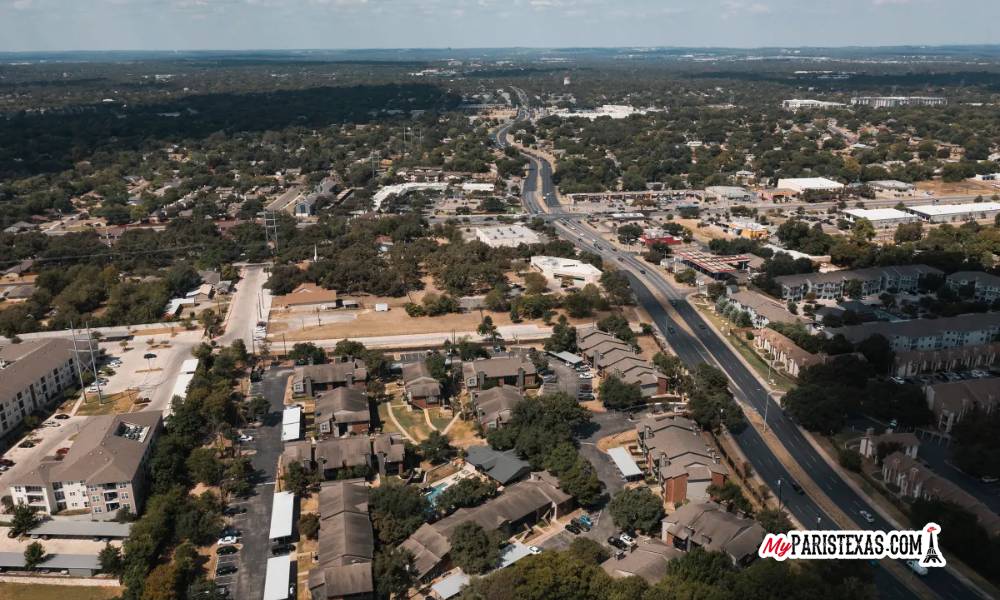
Photo Credit: Suburban development several miles south of Austin on Wednesday, Oct. 2, 2024. The U.S. Census found housing costs are outpacing incomes in Texas. Jordan Vonderhaar for The Texas Tribune
The Texas Tribune is a nonprofit, nonpartisan media organization that informs Texans — and engages with them — about public policy, politics, government and statewide issues.