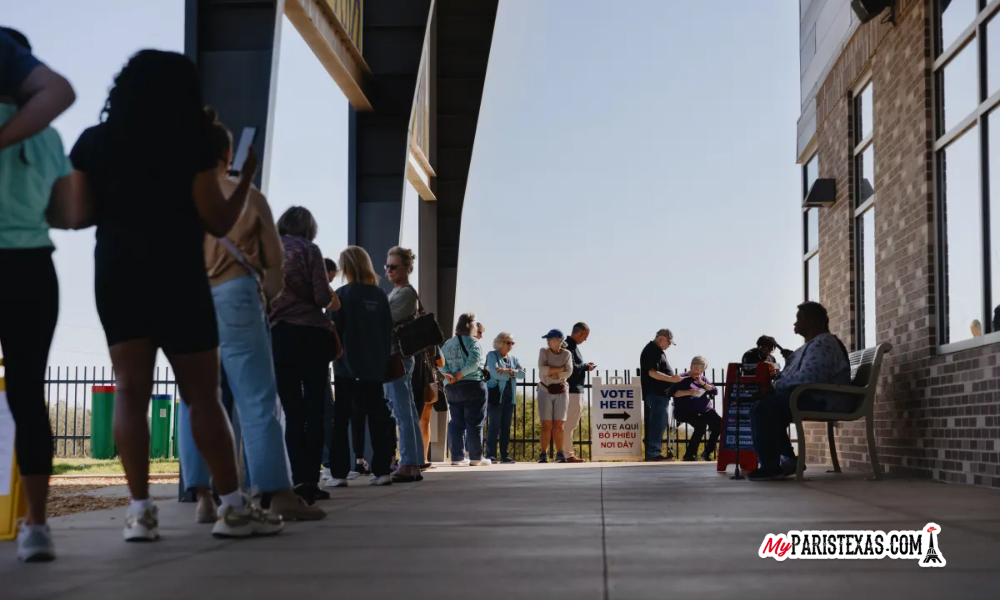

The typically low-key process has come under scrutiny since Jan. 6 rioters sought to halt certification of the 2020 presidential election.
Election results will begin rolling out the evening of Election Day, and although winners will be declared and victory speeches made, the results will be official only after they’re certified.
That final step will come weeks later when election results are formally locked in and a “certificate of election” is granted to the winners.
The certification itself is typically brief and without fanfare, but after rioters tried to stop certification of the 2020 presidential election at the U.S. Capitol, the process has received more scrutiny.
In Texas, the governor, House speaker and county commissioners play a role in certifying state and local elections, but they don’t have much to do beyond approving the results and calling it a day, experts say.
“There is no discretion,” said Jonathan Diaz, director of voting advocacy and partnerships at the nonpartisan Campaign Legal Center. “The certification of election results is a ministerial duty under the law, which means it’s mandatory.”
It’s typically a relatively noncontroversial and formulaic part of the election process, he said.
“By the time we get to the point of certifying the results, state and local officials have already gone through all of the post-Election Day processes in state law to confirm the accuracy of the results,” Diaz added.
Certifying the results is a legal responsibility, said Joshua Blank, research director of the Texas Politics Project at the University of Texas at Austin.
The Texas Election Code states that public officials “shall certify the tabulations.”
“It’s not a ‘may,” it’s a ‘shall,’” Blank emphasized. “It’s an obligation.”
Even so, voting rights advocates will be paying attention to the Texas certification process.
“A lot of people are watching very carefully and hoping for the best but preparing for the worst,” said Kenneth Parreno, counsel at Protect Democracy, which describes itself as a nonpartisan anti-authoritarianism group.
“We’ve seen, unfortunately, from our state and federal officials efforts to spread disinformation about who is voting and the integrity of our elections here,” Parreno said. “Just because they’ve called into question the integrity of the vote, we’ve just been concerned that these rogue officials may try to mess with Texas elections.”
Source: Texas Tribune BY Colleen Deguzman
Photo: Voters wait in line during early voting at the Como Community Center polling site in Fort Worth on Oct. 21, 2026. Shelby Tauber for The Texas Tribune