
Gov.-elect Gina Hinojosa plans to replace Mike Morath when she takes office in January. Educators hope the next education chief will value more of their input.
Gov.-elect Gina Hinojosa’s opposition to vouchers, excessive testing and state takeovers injected optimism into Texas communities longing for their students’ education to improve — but her first meaningful action toward change will likely occur when she appoints a career educator to oversee public schools for the first time in two decades.
A major part of the Austin Democrat’s campaign centered on firing Mike Morath after his 10-year reign as education commissioner. Morath, a former Dallas schools trustee, was a software engineer by trade. His classroom experience was limited to six months teaching computer science part-time. He often faced backlash from Texas educators who felt that his decisions relied more on data-centered intellect than boots-on-the-ground expertise.
In promising to appoint an education chief with comprehensive experience guiding students, Hinojosa made known her frustration with Morath’s heavy-handed leadership style, as well as his disconnect with large swaths of the constituency he was appointed to support.
Her promise offers loud and positive reassurance to many of the educators who desire change.
“We were all hopeless for a while,” said Roosevelt Nivens, superintendent of the Lamar school district and president of the Texas Association of School Administrators. “But with her taking the office, I have a lot of hope, and I feel like she’s going to really help us out.”
Texas’ education commissioner is one of the most powerful positions in state government, overseeing more than 9,000 public schools that serve nearly 5.5 million students.
The commissioner guides the Texas Education Agency as it develops student tests and publishes learning materials. They set criteria for how districts access additional funding, and they investigate wrongdoing. When a district does not meet academic standards, the commissioner has the power to close struggling campuses or strip locally elected leaders of authority.
The commissioner is also the voice of public education, communicating student and educator needs to lawmakers and the governor.
Hinojosa’s team is interviewing candidates for the position. Whoever she selects will need confirmation from at least two-thirds of the Republican-controlled Texas Senate.
For some onlookers, appointing an educator is necessary. Others say not so much. But the next leader must strike a balance between “good policy and practical reality,” said Randy Willis, executive director of the Texas Association of Rural Schools. How that looks may vary from large cities to small towns.
Source: Texas Tribune BY Jaden Edison
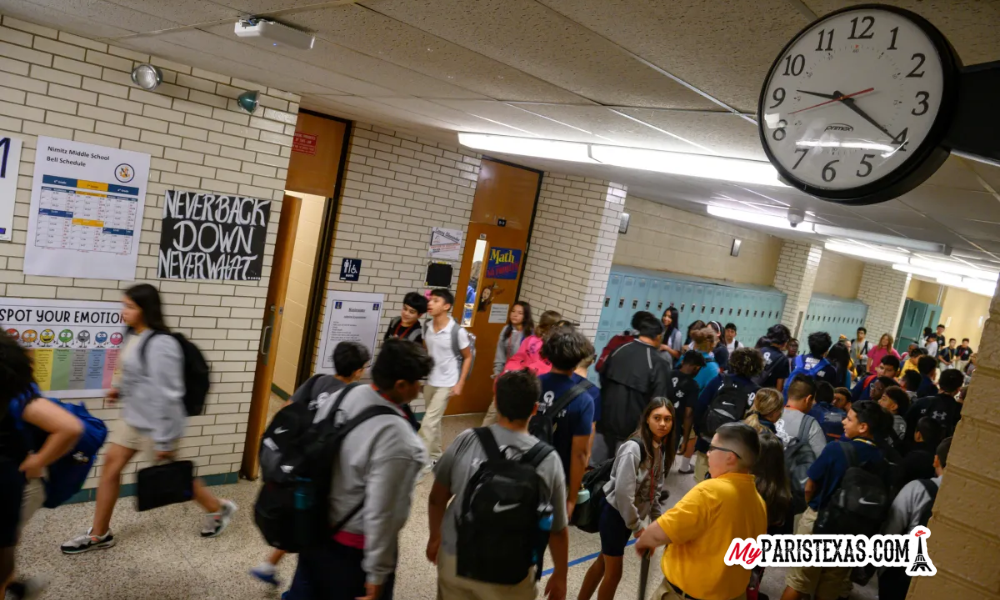
Photo: Nimitz Middle School students walk to the next class between periods Wednesday, Sept. 13, 2023 in Odessa. Eli Hartman/The Texas Tribune