
The money would come from the state’s rainy day fund and be distributed by the end of next year.
As Texas Democrats firm up their agenda ahead of next year’s legislative session, more details have emerged about a key campaign pledge by Gov.-elect Gina Hinojosa to tackle the state’s cost of living woes: sending $1,500 checks to every Texas household.
State Sen. Roland Gutierrez, a San Antonio Democrat, laid out a proposal this week to implement that pledge, spelling out some of the potential mechanics of how Texas — not in the business of sending cash payments to its residents — would send $1,500 to 11.6 million households.
The state would have to build a way to distribute the cash payments from the ground up, with the idea of putting money in Texans’ bank accounts by the end of next year.
The idea, which Hinojosa pitched as one-time financial relief to help Texans ease their affordability woes, faces a tough climb out of both chambers. To pay for the $17 billion proposal, lawmakers would draw from the state’s “rainy day fund” — essentially Texas’ savings account, which sits north of $27 billion. Doing so requires a two-thirds vote of the members present in each house.
Though Democrats control the Texas House of Representatives, they would still need significant Republican support to get it over the line. In the GOP-dominated Senate, Democrats would need to peel off nine Republicans.
Getting Republicans on board will prove difficult if not impossible. Though GOP state lawmakers have sought to provide financial relief to Texans, including via property tax cuts, they’ve criticized efforts to send cash directly to Texans in the past — although President Donald Trump said in September he’d give $5,000 to every adult if Republicans held both chambers of Congress following last week’s midterm elections. Texas prohibits sending direct cash payments to residents, but Democrats appear to have found a workaround.
There’s one aspect of the proposal likely to stir a fight. The bill doesn’t specify whether residents have to be U.S. citizens in order to receive payment, according to a Tribune analysis.
It’s possible the bill already comes up short. Gutierrez’s bill calls for using $17 billion to fund the idea, and allows up to 1% of those funds to be used to pay for administrative costs. That’s not enough to cover every Texas household, leaving a shortfall of at least $400 million.
If the proposal dies over the lack of GOP support, it could give Democrats fodder to cast Republicans as insufficiently attentive to the pressures put on Texans by the state’s cost of living.
How it might work
Under Gutierrez’s bill filed Monday, Texas households would get $1,500 each. For example, that’s enough to cover all of, if not a good chunk of, the typical monthly rent in many Texas metro areas, according to Zillow data. Households would have to live in Texas as of Jan. 1, 2027.
The comptroller’s office would have to set up a process for determining whether households are eligible for the payments — and then figure out how to send those payments. Texas doesn’t have an income tax, so it doesn’t have a ready-made statewide list of households and ways to send them money.
The bill would allow the agency to use information “lawfully available to the comptroller or another state agency” to verify whether a household is eligible. Residents would also be able to apply, and could prove their eligibility by providing documents like a lease or utility bill. It’s not clear whether households deemed eligible by the comptroller’s office would automatically receive payments.
For Texans experiencing homelessness or other households without a permanent address, the comptroller would have to figure out a way to get payments in their hands.
State law generally bars lawmakers from granting public money directly to individuals, but an exception allows legislators to do so in cases of “public calamity.”
Source: Texas Tribune BY Joshua Fechter
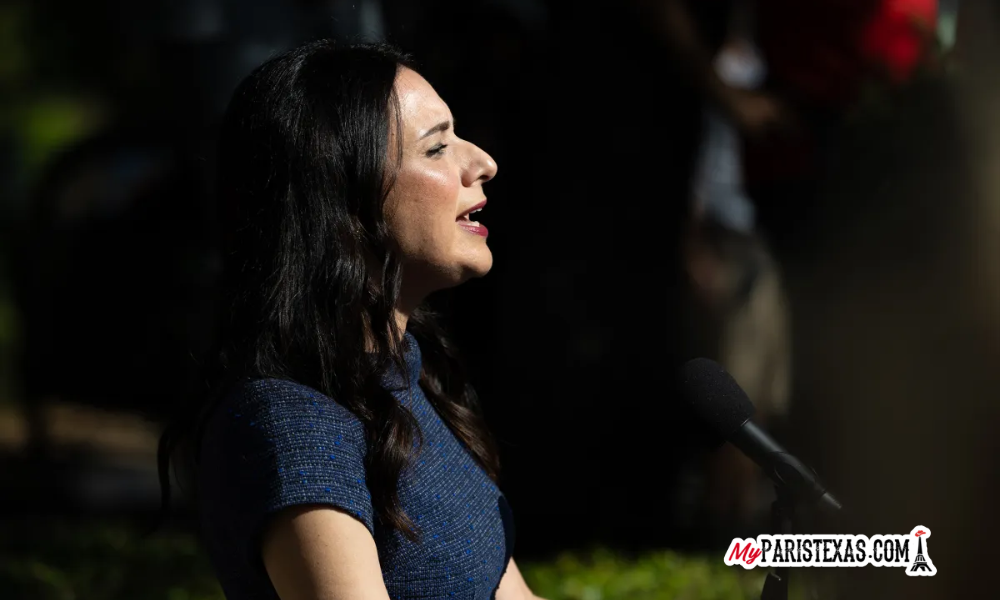
Photo: Gov.-elect Gina Hinojosa speaks to supporters during a “proposed debate” outside of the Governor’s Mansion in Austin on Oct. 15, 2026. Jacob Lujan/The Texas Tribune