
Hill County, which appears to be the first Texas county to pass a moratorium, replaced it Thursday with a checklist of requirements for developers.
A rural North Texas county that appears to be the first in the state to pass a data center moratorium has rescinded the measure after being sued by a developer for $100 million in damages.
The Hill County Commissioners on Thursday voted unanimously to end the moratorium and adopt a checklist it will require of data center developers, just two weeks after initially instating the temporary pause of up to one year.
County Judge Shane Brassell said he still considers the moratorium a success and said he believes the checklist is on firmer legal ground.
“Ultimately, we would have loved to have just been able to stop every project and everything, and that’s not what the moratorium did,” Brassell said. “But what it did do was — some projects that were less desirable, as far as maybe not the most honest — they left the county.”
He added that it bought them extra time to put together the checklist and learn more about other projects that they didn’t previously know about.
The move comes as similar battles are popping up all across the state, especially in unincorporated areas where The Texas Tribune reported this week that almost half of planned data centers in Texas are planned to be built, up from 12% now. Whereas Texas cities have zoning authority, counties typically don’t have the power to block development.
RCM Hill, LLC, filed a lawsuit against the county last week in which it said it has existing contracts to buy more than 800 acres of land for more than $80 million of development on a data center project. Attorneys did not immediately respond to a request for comment.
Their suit, filed May 27 in federal court in Austin, argues that the county “exceeded its lawful powers” in passing the moratorium, which threatened their ability to meet standards set by state electricity regulators needed to petition for interconnection.
It’s unclear whether the company will continue to pursue the litigation over the checklist. Brassell said the checklist derives its authority from various state statutes.
Source: Taylor Goldenstein,
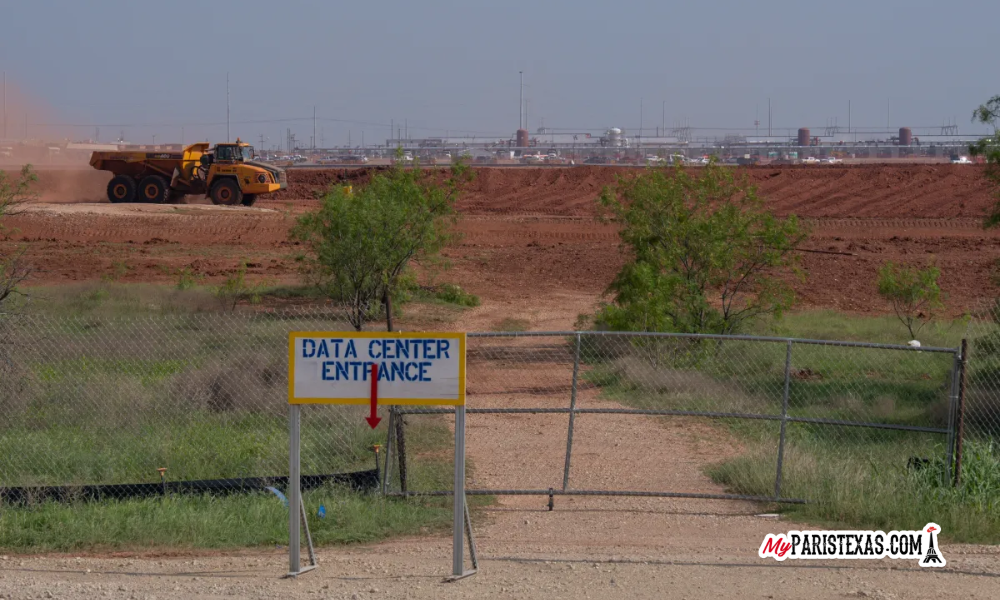
Photo Credit: Work continues on the Stargate data center Sunday, April 26, 2026, in Abilene. Jon Shapley for The Texas Tribune
The Texas Tribune is a nonprofit, nonpartisan media organization that informs Texans — and engages with them — about public policy, politics, government and statewide issues.