
After an industrial building boom on Corpus Christi Bay, the city is drilling wells to meet water demand, and rural Nueces County residents say their own wells are being impacted.
NUECES COUNTY — Texas’ eighth-largest city has seen the water crisis coming for years, and now it’s here: Its two main reservoirs are at historic lows amid a persistent drought and city leaders have told residents they’re less than a year away from major water cuts that could force them to reduce their water use by 25% or face extra fees.
Industry associations representing companies like Valero and LyondellBasell have warned city officials they might have to reduce their local operations or shut down completely if the city fails to secure more water supply.
And the city’s long-promised solution to the looming crisis — a planned desalination plant that would have turned millions of gallons of seawater into fresh water — collapsed last year under fierce criticism from environmental groups and local leaders over its ballooning price tag and its potential harm to Corpus Christi Bay’s ecosystem. Efforts to revive the project or a similar plant are underway but could take years.
Scrambling to keep water flowing to refineries, homes and businesses, the city has turned to what they’re calling a “drought-resistant” water source: drilling for groundwater.
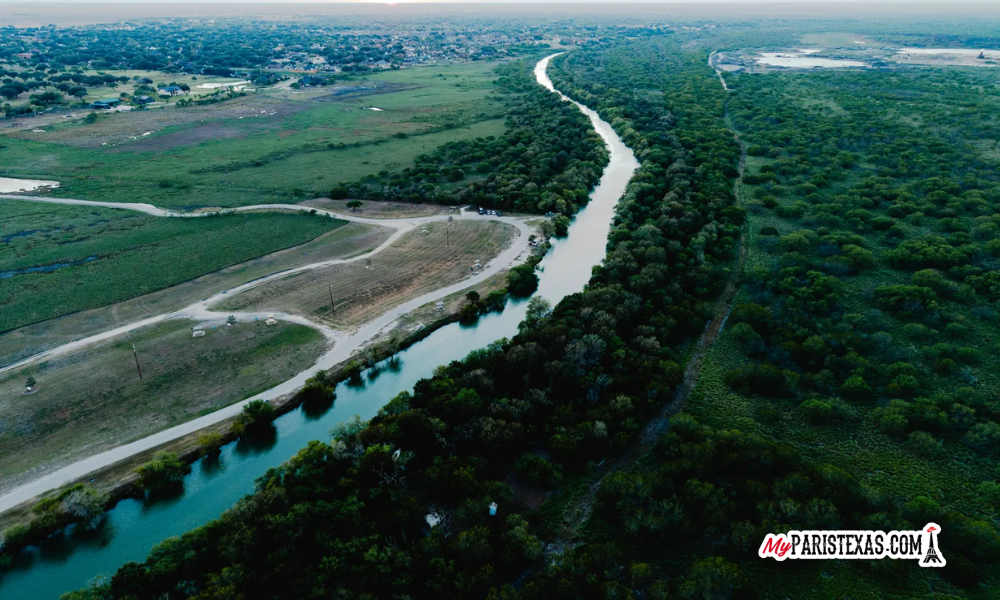
Eight city wells in rural Nueces County are now pulling about 8 million gallons of groundwater per day from the Evangeline Aquifer and spilling it into the Nueces River, which supplies the city’s water treatment plant. Another 12 wells are under construction or being tested and two other groundwater projects are being planned.
Groundwater is being added to the city’s supply as part of a “diversified water strategy,” and the city’s water supply is not currently maxed out or fully committed to existing users, said Ashley Marion, a spokesperson for the city’s water department.
Meanwhile, water experts say the city can’t rely on groundwater indefinitely because large pumping projects can easily overwhelm aquifers, and they don’t recharge fast enough.
“Think of it like a bank account. There’s only so much in there,” said Amy Bush, a hydrologist and former general manager of a groundwater conservation district. “You cannot keep taking out hundreds and putting in dimes.”
Some city officials are concerned for the region’s future water supply.
“Oh, I’m terrified,” said Rolando Barrera, who has served on the Corpus Christi City Council since 2018. “I’ve been called a fear mongerer and it’s because I am really scared.”
Barrera, one of the most vocal supporters of desalination, is critical of other council members, mostly newly-elected, who voted against the project last year.
“Unfortunately, my colleagues don’t realize the severity of the situation, and they don’t recognize that curtailment is imminent,” he said.
Sylvia Campos, a city council member who voted against desalination, said she isn’t worried about the city’s future water supply. She argues that tapping into groundwater and asking industrial users that are driving most of the area’s water demand to conserve water and recycle wastewater are possible solutions.
But propping up the city’s water supply with wells could threaten the survival of rural Nueces County residents who depend on that same water.
A group of farmers, gardeners and a retired refinery manager says their wells have dropped since the city started its drilling push and their water is becoming noticeably saltier.
“Several of us have lost pressure to our wells,” said Daniel Brodhag, a 69-year-old retired machinist who lives down the road from the city’s wells. “The water levels and the amount of pressure that the wells have now has dropped considerably.”
Brodhag said his well “used to flow with pretty good pressure out of the top of the well, and now it just kind of trickles out.”
Statewide surface water scarcity
What’s happening in Corpus Christi highlights a bigger problem across Texas: Surface water in rivers and reservoirs is getting more scarce and unreliable. Droughts are getting longer and deeper, driven by climate change. Meanwhile, the state estimates that its population will increase 73% by 2070.
So groundwater is becoming the go-to solution for cities large and small.
San Antonio hired a company in 2017 to drill 18 water wells into the Carrizo-Wilcox Aquifer in North Central Texas that now pump billions of gallons per year through a 142-mile pipeline to the growing city. In East Texas, a Dallas developer plans more than 40 high-capacity wells in Anderson, Houston and Henderson counties to send billions of gallons of water from that same aquifer to water-stressed areas of the state.
Parts of Texas that don’t have a groundwater conservation district still operate under the “rule of capture,” a doctrine from the early 1900s that says groundwater belongs to whoever owns the land above it — and they can pump as much as they want, regardless of impacts to neighbors. This leads to water disputes, especially when a big user like a city comes in and pumps large amounts of water.
“Poor planning on [the city’s] part does not constitute an emergency on us,” said Kelly Harlan, a pilot whose family has farmed in the area for generations.
Alarmed well owners around Corpus Christi are now pushing for the state to establish a groundwater conservation district in Nueces County to regulate pumping by the city.
About 72% of Texas aquifers are overseen by groundwater conservation districts, created to manage how much groundwater can be pumped from aquifers in attempts to slow depletion — unlike rivers, groundwater replenishes slowly.
A district could deny new drilling permits orlimit how much water landowners can pump by putting a cap on all well owners, said Robert Mace, a water expert and executive director of the Meadows Center for Water and the Environment at Texas State University. But districts can’t impose limits on a specific well owner or shut them off entirely.
“Could they completely shut Corpus Christi off from producing water in Nueces County? Probably not. Districts are required to treat people equally,” Mace said.
What led to the water crisis?
For decades, Corpus Christi has supplied water not only to residents and small businesses, but increasingly to heavy industry ringing Corpus Christi Bay. Since 2015, city leaders have aggressively recruited petrochemical plants, steel mills, and liquefied natural gas export facilities with assurances that water would be available.
While the city’s population grew by just 12,000 people over the past decade, to about 318,000 residents, overall water demand continued to climb, driven largely by industrial use, according to Jim Klein, president of the local Sierra Club and a former city council member.
Today some of the city’s biggest water users include crude oil refineries like Valero Refining and Flint Hills Resources, as well as petrochemical companies like LyondellBasell.
“The water has always been for industry,” Klein said. “Not even just for existing industries, but to lure more heavy water users into the area.”
He said that shift accelerated after a pivotal federal policy change. In 2015, the Obama administration lifted the U.S. ban on crude oil and natural gas exports. While the Port of Corpus Christi already had export terminals, lifting the ban triggered a building boom that made the port the nation’s top exporter of oil and gas.
Klein said that moment fundamentally reshaped the local economy and the city’s water planning as it promised more and more water to new industrial users.
Against that backdrop, Corpus Christi proposed its most ambitious water project yet: a seawater desalination plant.
The project was promoted as a “drought-proof” supply that would serve both residents and industry while securing the city’s long-term water future. The plant was designed to produce roughly 30 million gallons of water per day by 2028. Most of the water would have gone to industrial users, according to the Texas Chemistry Council, with enough to also supply 100,000 households.
In 2017, Margie C. Rose, a former city manager, wrote a letter to ExxonMobil promising massive volumes of water: “we feel we have sufficient water supplies to meet your needs today and into the foreseeable future.” ExxonMobil’s plastics plant, completed in 2022, can use about 25 million gallons per day — nearly equal to what the desalination plant was expected to produce.
Residential customers, meanwhile, were facing water restrictions with each severe drought. Today those include: banned from watering lawns and having to wash cars and boats with a 5-gallon bucket —under threat of fines up to $500 per violation per day.
“When I boil my eggs, I don’t throw out my water, I leave my water on the stove so that it’ll cool down, and I use that to water my plants,” said Isabel Araiza, who co-founded the group For the Greater Good in 2016 advocating against the desalination plant.
“We don’t water our lawn,” Araiza added. “We try to use as little water as possible.”
Over time, the desalination project became a flashpoint.
The cost alarmed many locals as estimates ballooned, most recently from nearly $760 million to more than $1.2 billion. And environmental groups raised alarms about the plant discharging super-salty brine into the bay that could increase salinity levels and create “dead zones” potentially harming the sensitive, mostly enclosed coastal ecosystem.
By 2022, a newly-elected city council was less willing to back the project without studies on its potential environmental impacts and clear plans for how to pay for it.
In a pivotal vote last year, council members killed the desalination plan, which had already secured permits and some state funding through the Texas Water Development Board.
Bob Paulison, executive director of Coastal Bend Industry Association, said that move upended the area’s long-term water planning.
“We now need to find another 30 million gallons a day of supply and there are very few projects that can deliver that scale in the needed time frame,” Paulison said.
Plans to build a separate regional desalination plant, led by the Nueces River Authority, remains years away, with a target date of December 2029 at the earliest.
Will a groundwater district help?
Down County Road 73 in Nueces County, where one of the city’s two well fields is pumping about 8 million gallons of water per day into the Nueces River, the neighboring landowners say they’re already seeing changes to their wells.
Drawing large volumes of water from the aquifer reduces groundwater pressure in the area, which weakens many nearby wells and causes water levels to fall. Well owners say they have to install pumps to access water that previously rose naturally to the surface.
One nearby city well was recently tested by the group trying to form a groundwater district and had dissolved solids — which include minerals like calcium, chloride or sulfates — measured at 3,412 parts per million, levels high enough to damage crops and household plumbing.
When this salty groundwater is discharged into the Nueces River it can raise salinity levels and make the river more brackish.
The city wells are “pulling water out faster than [the aquifer] can recharge,” said Harlan, the pilot who lives in the area and comes from a long line of farmers.
Harlan is leading a grassroots push to create Nueces County’s first-ever groundwater conservation district, which could oversee pumping. Residents petitioned the state’s environmental agency, the Texas Commission on Environmental Quality, in September, and if the agency approves a new district, local residents would still need to vote on creating the district.
But water experts say the odds are long.
TCEQ rarely approves districts through citizen petitions. Most are created by the Legislature, which meets every other year and won’t be in session again until 2027.
Groundwater conservation districts can regulate how much water can be pumped from wells within its boundaries, said Amy Bush, the former general manager of a groundwater conservation district. They can also require wells to be a certain distance from each other and property lines, but they can’t block a landowner from drilling a well as long as they follow the district’s rules.
The city is now trying to put its two well fields under the oversight of a special district, controlled by the city, that manages and protects water injected into the aquifer for storage and later use. That district can set pumping limits rather than a groundwater conservation district.
“This is the city’s effort to circumvent our efforts to control [pumping]. They don’t want to be regulated by any other entity. They want to regulate themselves,” said Scott Barraza, who was born and raised in Corpus Christi and now lives about five miles from one of the city’s well fields.
He and others have asked the TCEQ to look into the legitimacy of the city’s actions. A hearing is scheduled for February.
Barraza, 49, relies on the aquifer to provide all of the water for his 20-acre property, where he and his wife and daughter keep three goats, a horse and five dogs. The city’s new wells worry him because if the aquifer drops too much or becomes too salty, his only option is hauling water by truck.
“I am on a well,” Barraza said. “If it goes dry, I have no water.”
“If there’s no water on my land,” he added, “my land is worth nothing.”
Source: Alejandra Martinez, The Texas Tribune
Photo Credit: The Nueces River near Corpus Christi on Oct. 20, 2025. Brenda Bazán for The Texas Tribune
The Texas Tribune is a nonprofit, nonpartisan media organization that informs Texans — and engages with them — about public policy, politics, government and statewide issues.